Agentic Commerce AI

Developer SDK for programmable AI spending.
Configure trust levels from human-approved to fully autonomous. Powered by Google Deepmind.

Natural Language Programmable Guardrails Policy-as-Code

Agentic commerce needs guardrails

😵

Complex Interfaces

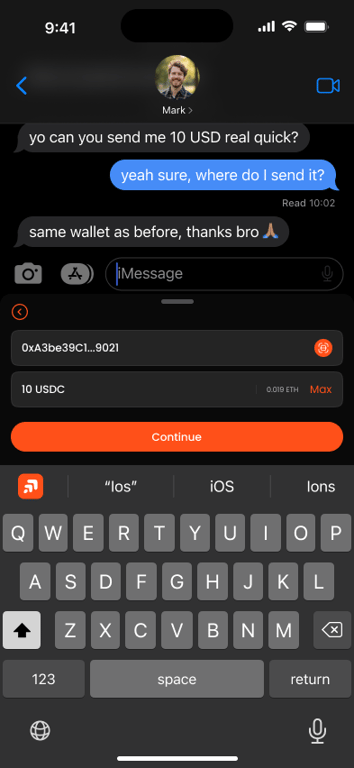
Users must navigate hex addresses, gas settings, and transaction builders just to send money

🤖

Unconfigurable AI Agents

Current AI agents are all-or-nothing: either fully autonomous or completely manual. No middle ground.

🏢

Enterprise Adoption Blocked

Businesses can't adopt AI spending without policy controls, audit trails, and configurable limits.

The question: How do we enable agentic commerce with programmable trust levels?

Programmable AI authority

1

AI Interprets

Google Deepmind parses natural language

"Send 10 USDC to vitalik.eth"
2

Policy Evaluates

Configurable rules check intent

allowlist ✓ | amount ≤ $50 ✓
3

Approval (Configurable)

Auto-approve OR human confirm

policy: "auto" | "confirm"
4

Backend Executes

On-chain transaction sent

tx: 0x7f3a...✓
⚙️ Developers configure the trust spectrum — from manual to autonomous

FabricBloc is a policy layer for agentic commerce

⚙️

Configurable AI Authority

Define what your AI agent can do autonomously vs. what requires approval. Set limits, allowlists, and escalation rules.

💬

USDC Commerce in Any Chat

Integrate AI-assisted payments into messaging apps. Voice and text commands with policy enforcement.

📋

Policy-as-Code

Define spending rules in code. Auto-approve trusted transactions, escalate risky ones. Full audit trail.

The Trust Spectrum

From fully manual → low-value auto-approve → trusted-party auto-approve → fully autonomous. You configure where your agent lives on that spectrum.

See it in action

1
User Input
"Send 10 USDC to 0xE1e0...7E26"
2
AI Parses Intent
action: "transfer"
amount: 10 USDC
to: 0xE1e0...7E26
Google Deepmind
3
Policy Evaluation
✓ Allowlisted recipient
✓ Under $50 limit
✓ Auto-approve eligible
4
Confirm & Execute
5
On-Chain
tx: 0x7f3a...✓
Arc Testnet

Policy-driven autonomy

AUTO-APPROVE

Allowlisted + Within Limits

Chat → Intent → Policy ✓ → Auto-Execute

Fully autonomous for trusted, low-value transactions

CONFIRM

New Address OR Exceeds Limit

Chat → Intent → Policy ⚠️ → Human Confirm → Execute

Escalate to human when risk increases

BLOCKED

Policy Violation

Chat → Intent → Policy ✗ → REJECTED

Hard limits enforced. No bypass possible.

Programmable trust layers

USER / AGENT
👤 Natural language Voice or text
CHAT UI
💬 React + Tailwind Intent capture
AI LAYER
🧠 Google Deepmind Parse intent
POLICY ENGINE
📋 Configurable rules Auto vs confirm
EXECUTION
⚙️ Go API Deterministic
BLOCKCHAIN
⛓️ Arc Testnet USDC settlement
Policy controls autonomy level Full audit trail

How it's built

Frontend

  • React + Vite
  • Tailwind CSS
  • WalletConnect
  • Intent state machine

Policy Engine

  • Go API
  • Configurable rules
  • Allowlists & limits
  • Audit logging

Blockchain

  • Arc Testnet
  • ERC-20 USDC
  • Native USDC
  • Sub-second finality

Configure your autonomy level

Can AI spend automatically?
If you configure it to. Set allowlists and limits for auto-approve. Everything else escalates.
What if policy is violated?
Hard block. Policy engine rejects. No execution. Full audit log.
Can we go fully autonomous?
Yes. Configure policy to auto-approve all trusted transactions. Start restrictive, expand as trust builds.
What about enterprise compliance?
Built-in. Audit trails, policy versioning, approval workflows for high-value.
⚙️

Key Principle: You define the rules. AI operates within your boundaries.

What's novel here

Programmable AI Authority

Unlike binary "AI has access" or "AI doesn't" — FabricBloc lets you define exactly what your agent can do autonomously, and what requires escalation.

Policy-as-Code

Define spending rules in code. Version control your agent's authority. Deploy policy updates without redeploying the app.

Progressive Trust

Start with human-in-the-loop. Gradually expand autonomy as your agent proves reliable. Reduce friction over time.

Enterprise-Ready

Audit trails, compliance controls, and approval workflows that enterprises require for AI spending.

Agentic commerce with configurable guardrails — from manual to fully autonomous

From POC to production

Current POC

  • Human confirmation mode
  • Allowlist-based approvals
  • USDC on Arc Testnet
  • Chat interface demo

Next: Auto-Approve

  • Policy-driven auto-execution
  • Configurable spend limits
  • Trusted party allowlists
  • API for programmatic access

Future: Full Autonomy

  • Agent-to-agent payments
  • API/compute/data purchasing
  • Usage-based billing
  • Multi-chain settlement

Today's POC demonstrates the policy infrastructure. The path to full autonomy is clear.

KeyFlo: Neobank meets AI

A reference neobank showing how any fintech can offer human-language transactions. The keyboard SDK is the surface layer enabling this new level of interoperability — working system-wide across any app.

KeyFlo Wallet UI
💬

Text to Transact

Type naturally in any chat

"Send Chris $10 for lunch"
🎤

Voice to Transact

Speak your intent, AI executes

"Pay my rent to Acme Properties"

Prompt to Transact

AI agents trigger payments

agent.pay("supplier", 500)

For neobanks & fintechs: Add conversational commerce to your app in days, not months.

FabricBloc

Agentic Commerce AI.
Programmable guardrails.

FabricBloc SDK enables developers to build AI agents that can spend USDC — with configurable authority levels from human-approved to fully autonomous.

Powered by
Google Deepmind Arc Testnet
Use arrow keys to navigate